What We Wish We Had Known Before Alex Was Diagnosed at 31
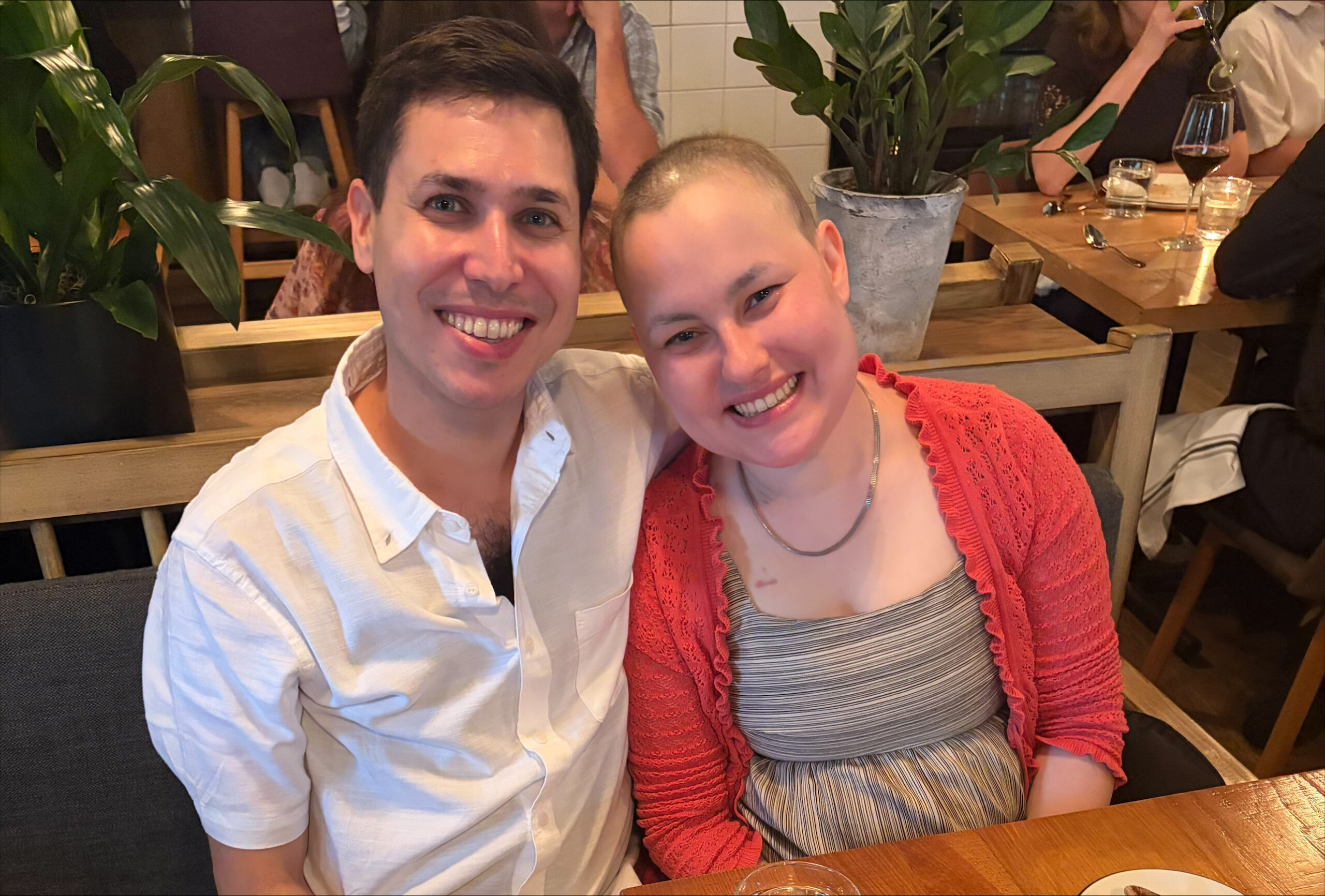
My wife, Alex, was diagnosed with stage 2 triple-negative breast cancer in February of 2026 when she was 31 years old. After we found out Alex had cancer, we were then told to test for BRCA, did so, and then found out she has a BRCA1 mutation.
My goal is to spread awareness of BRCA genes and to get Jews to know their BRCA risk. With knowledge of this mutation, cancer outcomes can be drastically improved by taking early, preventative measures.
When we found out Alex had triple-negative breast cancer, it was already stage 2, meaning that it may have already had time to spread to other parts of her body and could be essentially “hidden” by only being present in trace amounts that are extremely difficult to detect.
There exists this time we can’t get back where the cancer festered unbeknownst to us. This time when Alex wasn’t even yet 30 years old, when we could have known about her predisposition for breast cancer before it reached stage 2.
While her prognosis is good, our doctors advised us the best course of treatment involved neoadjuvant therapy, or treatment for 6 months before being surgically removed, so that her body could handle the chemotherapy.
It’s a terrible feeling to feel like life is out of your control. Psychological anguish, questions of “What if…?”
Many people are surprised when we tell them how many cycles of chemotherapy are required; triple-negative breast cancer appears as an invisible ailment that requires aggressive intervention. She did not feel sick, she did not look sick, but she is very sick, and we often need to remind people—and sometimes ourselves—of this fact.
When Alex had a fever with timing intersecting with low white blood count, she went to the ER and spent 5 days / 4 nights in the hospital. On top of Alex being immunocompromised, our daughter is exposed to illnesses at daycare/preschool, which leads to fear of every cough and sneeze causing Alex to go back to the hospital, missing a chemo infusion, and prolonging her cancer.
This cancer has taken the reins. We are doing everything we can to take back the reins, though we can’t steer us back on our original course (because we will forever be on a different course)
Following Alex’s Stage 2 triple-negative breast cancer diagnosis, we had to make several urgent and life-altering decisions. Within a month, she began six months of aggressive chemotherapy and immunotherapy, knowing treatment could permanently impact her fertility. Before starting treatment, we completed a single round of IVF and embryo freezing, including PGT testing to reduce the risk of passing on a BRCA mutation. Throughout treatment, Alex faced significant side effects, including severe immune suppression and autoimmune complications, while we balanced caring for our two-year-old daughter and managing the impact on our careers. After chemotherapy, Alex will undergo surgery to remove the tumor and may still require additional chemotherapy or radiation.
Alex’s father and both of his brothers had been diagnosed with prostate cancer in their 60s, several years before she found a lump in her breast. Even with this risk factor, no one in her family had ever been tested before her diagnosis, and no one ever directly advised Alex, her brother, nor her father that they should be tested for the BRCA mutation.
My insight gained since Alex’s cancer diagnosis:
BRCA mutations are prevalent even in individuals without known family history of breast cancer, leading to an inherited risk of cancer that can appear decades earlier than you expect.
We as young people now have easy access to genetic testing that our parents didn’t have at our age to screen for cancers that can be prevented in ourselves and our families.
Know your risk, so you can learn if you are a BRCA carrier. If you are a BRCA carrier, finding out as soon as possible gives you time for the best possible outcome and the greatest control over your life.
Here’s what I would have done differently now that we have that hindsight:
- Learn the risk factors
-
- Jews are 10 times more likely than the general population to be BRCA carriers
-
- More than just breast cancer. Prostate cancer. Pancreatic cancer. Men and women carry the gene mutation equally, even though it may express differently.
- Have a discussion with your family about your risk
- Learn your family history and whether you have any of the risk factors.
-
- This can be hard. Jews culturally don’t talk about getting sick and dying, and therefore we don’t know about our full family history.
-
- In addition, male family members with elevated risk may be “hiding” a carrier gene, as studies report that men are under-assessed for detection of BRCA 1/2 gene mutations
- Determine your risk and make a decision
- Based on your family history, come to a conclusion on what your risk is, and decide whether you want to test
-
- Whether or not you test, if you are a carrier, your health without any intervention is pre-determined (Genetics)
-
- The benefits of getting tested far outweigh the costs (Game Theory)
- You may be the very first person in your family to ever get tested, and that’s OK
- Developments made in the 90s mean that we can now quickly, easily and affordably screen for these genes.
-
- Your parents didn’t know this was an option which could be why they don’t know or talk about getting tested.
-
- While older generations put their fate in God’s hands, we now have this technology, a gift from God to use and give ourselves the best odds of survival.
-
- Look into your own future and change it for the better