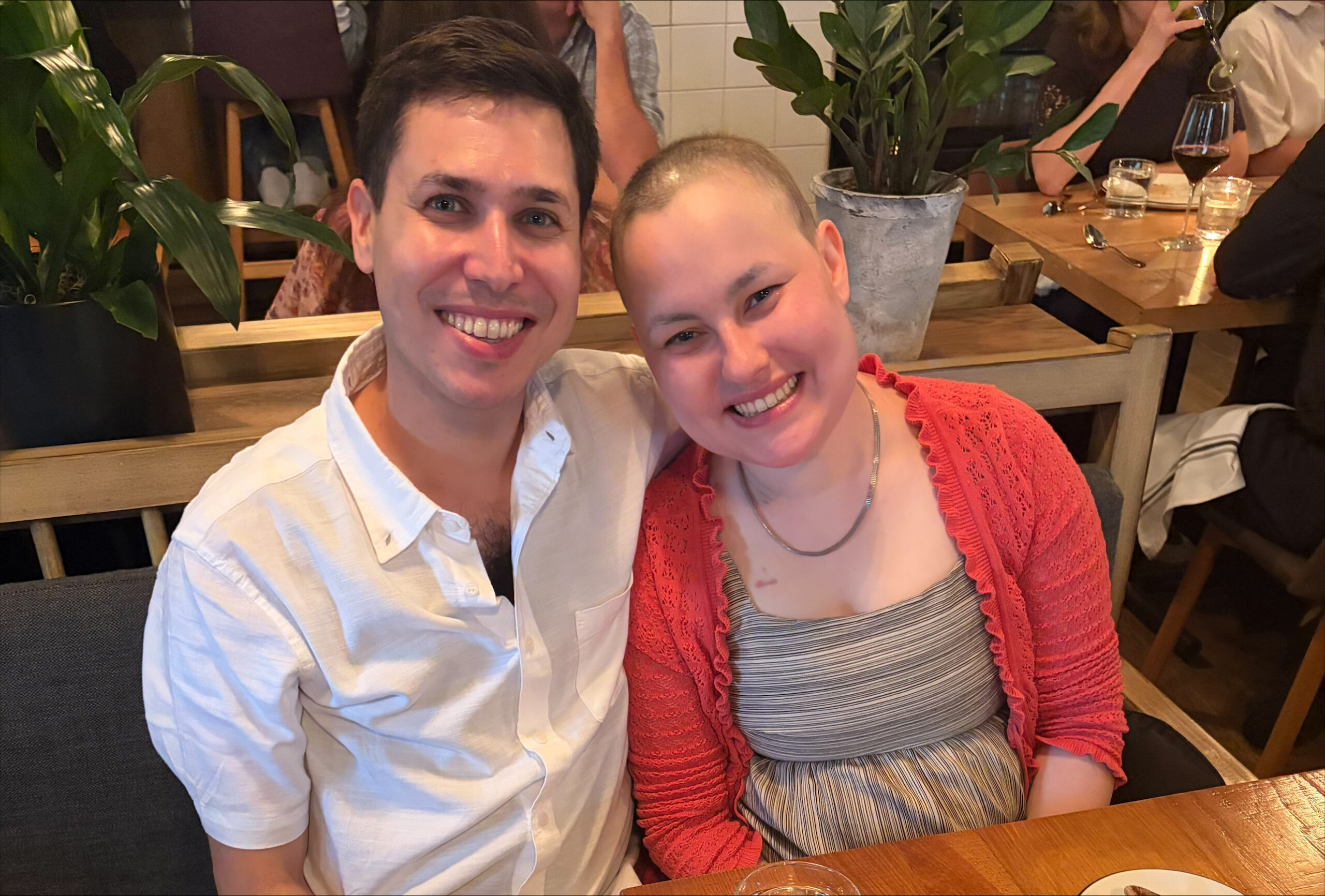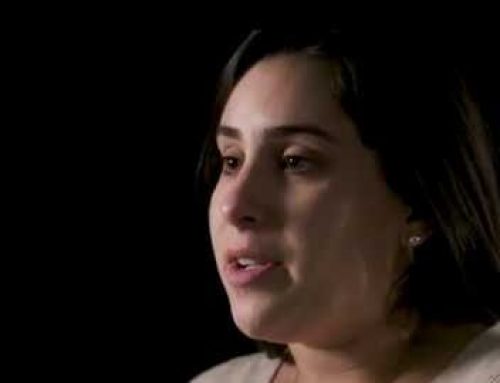
My wife, Alex, was diagnosed with stage 2 triple-negative breast cancer in February of 2026, at 31 years old. Shortly after her diagnosis, we were advised to test for BRCA and discovered she has a BRCA1 mutation.
At that moment, we felt like our lives were put on hold and control relinquished over to her cancer. We moved quickly and made several urgent and life-altering decisions, prioritizing Alex's diagnosis and BRCA1 result as the driving forces in our day-to-day lives and putting our laid-out plans for 2026 on the shelf.
Fortunately, carriers of BRCA gene mutations, like Alex, have options to reduce their cancer risks and retain control; however, this is only possible if you know you are a carrier. By sharing our personal story, I hope to show that hereditary cancer testing is not just about acquiring medical data, but rather it's a powerful tool that allows you to assert the greatest possible control over your health, your life, and your future.
With knowledge of this mutation, cancer outcomes can be drastically improved by taking early preventative measures. Had we known that Alex carried the BRCA1 mutation, we would have considered monitoring or preventative surgery to catch it sooner or avoid it altogether. But we did not have this knowledge. Instead, when we found out Alex had triple-negative breast cancer, it was already stage 2.
While her prognosis is good, triple-negative breast cancer requires aggressive intervention. Our doctors advised us that the best course of treatment would involve neoadjuvant therapy: six months of chemotherapy and immunotherapy before having the affected tissue surgically removed.
Chemotherapy can also have permanent impacts on fertility. So, before starting treatment, we completed a single round of egg retrieval, IVF, and embryo freezing, including pre-implantation genetic testing (PGT) testing to reduce the risk of passing on a BRCA mutation.
Throughout treatment, Alex faced significant side effects which forced her to spend multiple weeks in the hospital, all while we balanced caring for our two-year-old daughter and managing the impact on our careers. Thankfully, we had support from our family and friends in our community which kept us cared for, fed, and much more at ease during this time, as well as an incredible medical team who gave us sound advice during such a confusing and scary time.
In September 2026, Alex underwent a double mastectomy to both remove the affected breast tissue as well as prevent future cancer in the other breast. Post-operative results showed no cancer left, and so thankfully she does not currently need any further cancer treatment. But as we now know, the BRCA1 mutation comes with elevated risks of other cancers, so Alex will continue monitoring and taking preventative measures for the rest of her life.
But just because treatment has waned, the challenges are not over. This cancer has taken the reins. When you lose control, and the curtain is pulled back on a life that you never imagined, it's an agonizing feeling. It feels like life is out of your control. Psychological anguish—questions of "What if…?" —have plagued us constantly. What if's about the past, present, and future. We continue to do everything we can to take back control, but our path is forever altered. We want to turn our journey into something useful, turning our knowledge into advocacy by encouraging testing for known genetic risks so that others can proactively protect their futures.
My insights gained since Alex's cancer diagnosis:
-
BRCA mutations are prevalent even in individuals without known family history of breast cancer.
Even with a family history of prostate and pancreatic cancer, both of which are at elevated risk with a BRCA1 mutation, no one in her family had ever been tested before her diagnosis, and no one had ever advised Alex that she should be tested for the BRCA mutation.
-
This is not your parents' genetic test
Our generation has easy access to hereditary cancer testing that our parents didn't have. Many Jews are advised to test for genetic conditions like Tay-Sachs, but hereditary cancer testing is typically an additional, separate test.
-
You can look into your own future and change it for the better.
With hereditary cancer testing, you can learn if you are a genetic carrier. If you are a BRCA carrier, finding out as soon as possible gives you time for the best possible outcome and the greatest control over your life.
Here's what I would have done differently now that we have that hindsight:
1. Learn the risk factors
- Jews are 10 times more likely than the general population to be BRCA carriers
- BRCA (BReast CAncer) is a slight misnomer, as its mutation can lead to more than just breast cancer: ovarian cancer, prostate cancer, and pancreatic cancer.
- Men and women carry and pass down BRCA genes mutations equally, even though it may express differently.
2. Have a discussion with your family about your risk, even if it's difficult
- Learn your family medical history and whether you have any risk factors.
- This discussion can be hard. Jews culturally don't talk about getting sick and dying, and therefore we often don't know about our full family history.
- In addition, male family members with elevated risk may be "hiding" a carrier gene, as studies report that men are under-assessed for detection of BRCA 1/2 gene mutations.
3. Determine your risk and make a decision
- Based on your family history, consider what your risk is, and decide whether you want to test.
- Testing does not change whether you are a carrier of a BRCA mutation; it only changes your ability to take action to prevent cancer or diagnose it early.
- The benefits of getting tested far outweigh the costs.
4. You may be the very first person in your family to ever get tested, and that's okay
- Developments made in the 90's mean that we can now quickly, easily and affordably screen for these genes.
- Your parents may not have known this was an option, which could be why they don't know or talk about getting tested.
There's an old saying that an ounce of prevention is worth a pound of cure. Hereditary cancer screening is a powerful first step towards prevention which we wish to be available to all and are incredibly grateful that the Sarnoff Center can offer to Jewish individuals and families in Illinois. More than anything, we wish for you, the readers, to use cancer screening as a tool to continue on the path that you see for yourself.